Una rilettura in chiave jazz dei temi più celebri del Titano.
Disponibile anche in streaming e su CD.
A jazz reading of the most famous themes of the Titan. Also available on streaming and CD.
Giovanni Colombo, pianofortepiano | Marco Esposito, bassobass | Luca Bongiovanni, batteriadrums
Beethoven l'inventore del jazz?
Beethoven, the inventor of jazz?
Anche se il purista troverà sempre il modo di rabbrividire davanti ad un disco dal titolo "Jazz on Beethoven" - immaginando le peggiori torture inflitte alle note immortali del Titano - l'accostamento tra l'autore della "Patetica" e le note blu ricorre tra musicisti e studiosi più spesso di quanto non si creda, al punto che qualche temerario si è persino spinto a definire Beethoven "l'inventore del jazz". Il motivo? Negli ultimi anni della produzione beethoveniana - in cui videro la luce, oltre alla Nona Sinfonia, soprattutto visionari quartetti e sonate per pianoforte - non mancano i passaggi musicali che paiono anticipare di quasi un secolo l'era dello swing. Il caso più celebre è certamente la terza, spettacolare variazione dell'Arietta della Sonata op. 111, definito un rag-time ante litteram, ma troviamo esempi simili e altrettanto stupefacenti nella quarta Bagatella dell'op. 126, nel finale del Quartetto op. 132, nell'Agnus Dei della Missa Solemnis e in molti altri brani ancora. Le armonie ardite e soprattutto le sequenze ritmiche sincopate fanno certamente correre il pensiero verso la New Orleans del primo Novecento anziché la Vienna del diciannovesimo secolo, ma non devono trarre in inganno: non solo il contesto di riferimento è ovviamente diverso, ma anche il senso di questi elementi nella logica del discorso musicale è tutt'altro. Note blu e contrattempi costituiscono le pietre angolari del vocabolario jazzistico, mentre per Beethoven certe sequenze sono funzionali al principio della varietà in un'architettura musicale compatta, solidamente ancorata a principi formali "classici". Se l'accostamento superficiale appare quindi pretestuoso, esistono tuttavia sintonie più profonde che meritano di essere evidenziate. La prima è il percorso che conduce Beethoven a queste sperimentazioni, frutto da un lato dello studio della musica antica - in particolare della polifonia rinascimentale, con le sue ricercatezze contrappuntistiche e ritmiche - e dall'altro dell'interesse per la musica popolare. I cicli di folksongs armonizzati dal Titano - a partire da melodie irlandesi, scozzesi, ma anche polacche, svizzere e persino italiane - sono un episodio sottovalutato della sua produzione, ma costituiscono uno straordinario laboratorio di invenzioni musicali, basti citare il sorprendente Highland Harry, caratterizzato da sonorità che non si possono definire altrimenti che "country". Il dialogo tra elementi colti e popolari è lo stesso terreno fertile sul quale germoglierà il primo jazz, nutrito dalle radici africane del blues e dalle forme musicali europee. Ma c'è di più: anche se oggi abbiamo smarrito questa consapevolezza, Beethoven era noto fra i contemporanei anche come grande improvvisatore al pianoforte e l'estemporaneità del suo atto creativo appare evidente in molti suoi brani, specialmente nelle sonate per il suo strumento. Certo, il labor limae del compositore dà a queste opere la compattezza e la rigorosa logica formale che ben conosciamo, senza però cancellare le tracce di intuizioni musicali nate nel libero esercizio della fantasia. Ce ne sarebbe abbastanza, crediamo, per giustificare la scelta di Cieli Vibranti di celebrare il 250° compleanno del Titano con il progetto "Jazz on Beethoven", commissionato ad un musicista di grande talento come Giovanni Colombo, che ha accolto con entusiasmo la sfida di rileggere alcuni temi beethoveniani celebri per un'originale formazione in trio. Ma vogliamo osare di più: indipendentemente dalle connessioni storiche e culturali, siamo convinti che la reinvenzione della musica del passato non sia una mancanza di rispetto, ma il processo naturale attraverso cui ogni forma d'arte si sviluppa e che ne conserva intatta forza e grandezza. La musica di Beethoven non ne risulta offuscata, anzi, dimostra una volta di più la sua inesauribile vitalità, la sua capacità di parlare linguaggi diversi senza perdere la sua identità. Ogni epoca, del resto, ha la sua voce; ma la lezione dell'arte è immortale.
Fabio Larovere, Andrea Faini - Direzione artistica Cieli Vibranti
Even though the purist will always find a way to shudder at a record titled "Jazz on Beethoven" - imagining the worst tortures inflicted on the immortal notes of the Titan - the pairing of the author of the "Pathétique" with blue notes recurs among musicians and scholars more often than one might think, to the point that some daring souls have even called Beethoven "the inventor of jazz". The reason? In the last years of Beethoven's output - which saw the birth, besides the Ninth Symphony, of visionary quartets and piano sonatas above all - there is no shortage of musical passages that seem to anticipate the swing era by almost a century. The most famous case is certainly the third, spectacular variation of the Arietta of Sonata op. 111, described as a ragtime avant la lettre, but we find similar and equally astonishing examples in the fourth Bagatelle of op. 126, in the finale of Quartet op. 132, in the Agnus Dei of the Missa Solemnis and in many other pieces. The bold harmonies and above all the syncopated rhythmic sequences certainly send the mind to the New Orleans of the early twentieth century rather than the Vienna of the nineteenth, but they should not mislead: not only is the context obviously different, but the meaning of these elements within the logic of musical discourse is entirely different too. Blue notes and offbeats are the cornerstones of the jazz vocabulary, while for Beethoven certain sequences serve the principle of variety within a compact musical architecture, firmly anchored to "classical" formal principles. If the superficial comparison therefore appears specious, there are nonetheless deeper affinities worth highlighting. The first is the path that leads Beethoven to these experiments, the fruit on one side of his study of early music - in particular Renaissance polyphony, with its contrapuntal and rhythmic refinements - and on the other of his interest in popular music. The cycles of folksongs harmonised by the Titan - starting from Irish and Scottish melodies, but also Polish, Swiss and even Italian ones - are an underrated episode of his output, yet they form an extraordinary laboratory of musical invention; suffice it to mention the surprising Highland Harry, with sounds that can only be called "country". The dialogue between learned and popular elements is the same fertile ground from which early jazz would sprout, nourished by the African roots of the blues and by European musical forms. But there is more: even if we have lost this awareness today, Beethoven was known among his contemporaries as a great improviser at the piano, and the spontaneity of his creative act is evident in many of his pieces, especially the sonatas for his instrument. Of course, the composer's labor limae gives these works the compactness and rigorous formal logic we know so well, without erasing the traces of musical intuitions born in the free exercise of fantasy. That would be enough, we believe, to justify Cieli Vibranti's choice to celebrate the Titan's 250th birthday with the project "Jazz on Beethoven", commissioned from a musician of great talent such as Giovanni Colombo, who enthusiastically took up the challenge of reinterpreting some famous Beethoven themes for an original trio. But we want to dare more: regardless of the historical and cultural connections, we are convinced that reinventing the music of the past is not a lack of respect, but the natural process through which every art form develops and which keeps its strength and greatness intact. Beethoven's music is not overshadowed by it; on the contrary, it shows once more its inexhaustible vitality, its ability to speak different languages without losing its identity. Every era, after all, has its own voice; but the lesson of art is immortal.
Fabio Larovere, Andrea Faini - Artistic direction, Cieli Vibranti
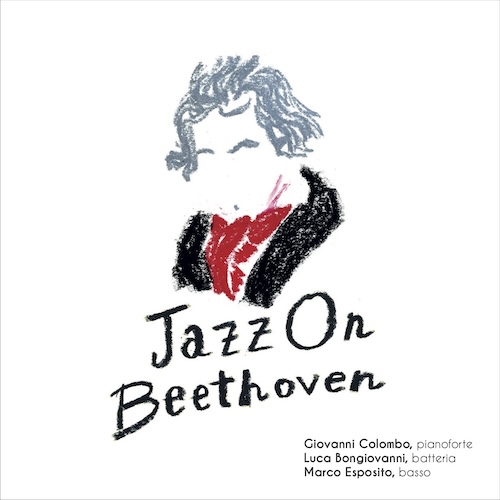
Cieli Vibranti presenta Jazz on Beethoven
Cieli Vibranti presents Jazz on Beethoven
Uscito mercoledì 16 dicembre 2020, in occasione del 250° anniversario dalla nascita di Ludwig van Beethoven, Jazz on Beethoven è il disco dedicato al compositore tedesco: un progetto di Cieli Vibranti commissionato al musicista Giovanni Colombo, che con entusiasmo ha riletto alcune celebri opere beethoveniane. L'album, nato da un'idea di Andrea Faini e Fabio Larovere di Cieli Vibranti, è una rivisitazione in chiave jazz di alcuni tra i più importanti temi di Beethoven, una reinvenzione della musica del passato che prende vita grazie all'estro e alla creatività di Giovanni Colombo. Il pianista e artista originale ha per l'occasione dato vita a una formazione in trio con il batterista Luca Bongiovanni e il bassista Marco Esposito. Prodotto dall'Associazione Cieli Vibranti.
Released on Wednesday 16 December 2020, on the occasion of the 250th anniversary of Ludwig van Beethoven's birth, Jazz on Beethoven is the album dedicated to the German composer: a Cieli Vibranti project commissioned from the musician Giovanni Colombo, who enthusiastically reinterpreted some famous Beethoven works. The album, born from an idea by Andrea Faini and Fabio Larovere of Cieli Vibranti, is a jazz reading of some of Beethoven's most important themes, a reinvention of the music of the past that comes to life thanks to the flair and creativity of Giovanni Colombo. For the occasion, the original pianist and artist put together a trio with drummer Luca Bongiovanni and bassist Marco Esposito. Produced by the Cieli Vibranti Association.
Dicono di Jazz on Beethoven...
What they say about Jazz on Beethoven...
"Dopo qualche minuto di ascolto, si dimentica la dicotomica classica-jazz per godere di brani pieni di energia in cui le distinzioni tra generi e stili vengono superate, si toccano registri espressivi molto diversi ma sempre con coerenza e un linguaggio semplice e diretto. Ottima la prova di tutti gli interpreti, con una menzione speciale per Colombo, che si disimpegna brillantemente anche in solo nella traccia finale, delle coloratissime Variazioni sull'Eroica."
Connessi all'opera
"After a few minutes of listening, one forgets the classical-jazz dichotomy and enjoys pieces full of energy in which the distinctions between genres and styles are overcome, touching very different expressive registers but always with coherence and a simple, direct language. All the performers do an excellent job, with a special mention for Colombo, who brilliantly handles even a solo on the final track, the very colourful Eroica Variations."
Connessi all'opera
"Non si tratta di mettere in swing Beethoven, il gigante che ha cambiato il corso della musica, ma di giocare su richiami reciproci, interferenze, citazioni, riformulazioni. Un nucleo sonoro, dal colorito affascinante e ricco di positività, partorito in un momento così drammatico della nostra esistenza."
Gaetano Fiore
"It is not about putting Beethoven, the giant who changed the course of music, into swing, but about playing on mutual echoes, interferences, quotations, reformulations. A sonic core, with a fascinating colour and full of positivity, born in such a dramatic moment of our existence."
Gaetano Fiore
Tracklist
01. Für Elise
02. Sonata n. 17 "La tempesta" - Allegretto (III)
03. Sonata n. 8 "Patetica" - Adagio cantabile (II)
04. Sinfonia n. 5 - Allegro con brio (I)
05. Sonata n. 14 "Al chiaro di Luna" - Adagio sostenuto (I)
06. Sinfonia n. 9 - Inno alla gioia - Allegro molto (IV)
07. Sonata n. 23 "Appassionata" - Allegro assai (I)
08. Sonata n. 32 - Arietta (II - Variazione III)
09. Sonatina n. 1 - Moderato (I)
10. Variazioni Eroica
01. Für Elise
02. Sonata no. 17 "The Tempest" - Allegretto (III)
03. Sonata no. 8 "Pathétique" - Adagio cantabile (II)
04. Symphony no. 5 - Allegro con brio (I)
05. Sonata no. 14 "Moonlight" - Adagio sostenuto (I)
06. Symphony no. 9 - Ode to Joy - Allegro molto (IV)
07. Sonata no. 23 "Appassionata" - Allegro assai (I)
08. Sonata no. 32 - Arietta (II - Variation III)
09. Sonatina no. 1 - Moderato (I)
10. Eroica Variations
Il disco può essere richiesto inviando una email o una richiesta a Cieli Vibranti (cielivibranti.it).
The CD can be requested by sending an email or a request to Cieli Vibranti (cielivibranti.it).